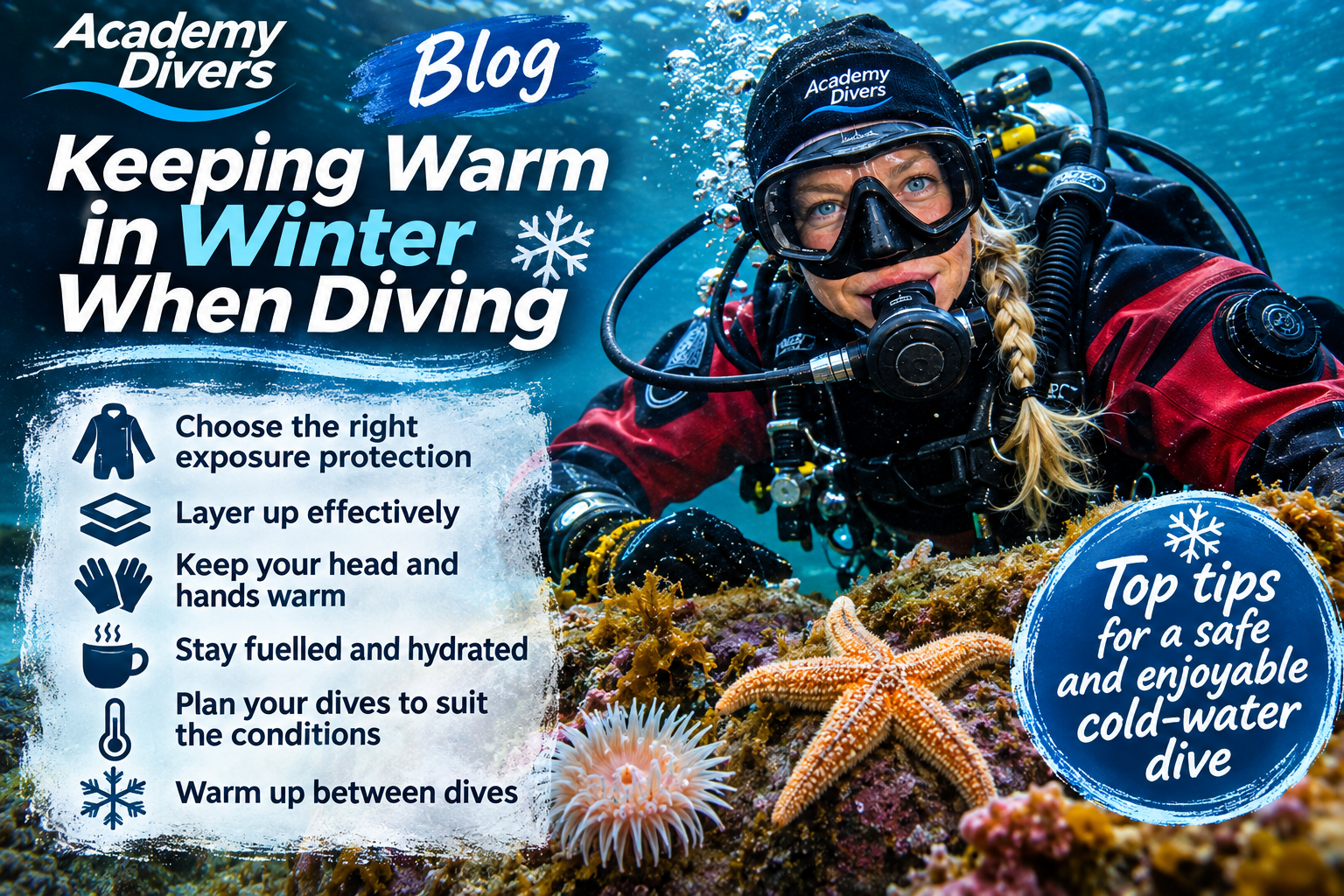
Top tips from Academy Divers
Just because the temperatures have dropped doesn’t mean you have to hang up your fins for the winter!
Winter diving in the UK can be fantastic. With fewer divers at popular sites, potentially improved visibility and some amazing underwater experiences, there’s plenty to enjoy. But one thing is certain – staying warm is essential for a safe and enjoyable dive.
Whether you’re a seasoned cold-water diver or planning your first winter adventure, here are our top tips for keeping warm.
1. Choose the Right Exposure Protection
A good-fitting drysuit can make all the difference when diving in cold water.
Unlike a wetsuit, a drysuit is designed to keep water out, allowing you to wear insulating layers underneath.
However, not all drysuits provide the same warmth. The insulation you wear underneath is just as important as the suit itself.
Our top tips:
- Make sure your drysuit fits correctly and the seals are in good condition.
- Choose suitable thermal undersuits for the water temperature.
- Don’t forget warm socks and appropriate thermal base layers.
- Avoid wearing too many bulky layers that restrict movement or make buoyancy control difficult.
Remember, a drysuit keeps you dry, but it’s your thermal protection that helps keep you warm.
2. Don’t Forget Your Head and Hands! 🧤
Your head and hands can become particularly uncomfortable in cold water.
A well-fitting hood and suitable gloves are essential for winter diving.
Consider a thicker hood, such as a 5 mm or 7 mm model, depending on conditions and personal preference.
For your hands, suitable neoprene gloves or a properly configured dry-glove system can help keep your fingers warmer.
Top tip: Make sure you can still operate your equipment, release clips and manage your dive computer comfortably while wearing your gloves.
3. Layer Up – But Choose Your Layers Carefully
When it comes to staying warm, layering is key.
Start with a moisture-wicking thermal base layer, add an insulating undersuit and finish with your drysuit.
Avoid cotton next to your skin, as it absorbs moisture and loses much of its insulating effectiveness when damp.
Choose clothing designed for cold-water diving wherever possible.
And remember, thicker doesn’t always mean better. Your layers need to work together without restricting movement or interfering with drysuit operation.
4. Keep Warm Before You Get in the Water
One of the biggest mistakes winter divers make is getting cold before the dive even begins.
Standing around in the wind while preparing equipment can quickly leave you chilled.
Try to:
- Prepare and check as much equipment as possible before getting changed.
- Wear a warm coat, hat and gloves before kitting up.
- Keep out of the wind and rain wherever possible.
- Have a warm drink before diving.
- Avoid getting sweaty while carrying equipment or walking to the entry point.
If you’re cold before you enter the water, you’re already at a disadvantage.
5. Plan Shorter Dives
Winter isn’t necessarily the time to push your dive duration.
Cold water can affect comfort, dexterity, concentration and overall diving performance.
Plan your dive around the conditions, your equipment and the experience of everyone in the group.
Agree with your buddy that either of you can end the dive if you start feeling cold.
Never feel pressured to stay underwater when you’re uncomfortable.
Being cold isn’t something you need to prove you can tolerate!
6. Eat Well and Stay Hydrated ☕
Your body needs energy to help maintain its temperature.
Make sure you’ve eaten properly before diving and stay hydrated throughout the day.
Warm drinks and a flask of soup can be particularly welcome between dives.
Avoid alcohol before diving, and don’t rely on caffeine or hot drinks to compensate for inadequate thermal protection.
7. Warm Up Between Dives
If you’re planning more than one dive, what you do during your surface interval matters.
As soon as you finish your dive:
- Get out of wet equipment when practical.
- Dry yourself and change into warm clothing.
- Put on a hat and warm jacket.
- Have a warm, non-alcoholic drink.
- Shelter from the wind and rain.
If your undersuit has become damp, change it before your next dive.
Don’t assume that because you’ve warmed up slightly, you’re ready for another cold-water dive. Give yourself enough time to recover.
8. Consider Heated Undersuits – With Care
Heated diving garments can provide additional comfort, but they need to be selected and used carefully.
Use equipment specifically designed for diving and follow the manufacturer’s instructions.
Never rely on an electrical heating system as your only source of insulation. You should remain adequately protected if the heating fails.
Training, correct configuration and an understanding of the equipment are particularly important.
9. Know When You’re Too Cold
Feeling cold is one thing, but excessive cooling can become a serious safety issue.
Watch for warning signs such as:
- Persistent or uncontrollable shivering
- Numb fingers or loss of dexterity
- Difficulty concentrating
- Unusual tiredness or confusion
- Problems operating equipment
If you or your buddy are becoming cold, end the dive safely rather than trying to push through it.
If hypothermia is suspected, seek appropriate medical assistance. Severe symptoms such as confusion, collapse or reduced consciousness require emergency help.
10. Look After Your Equipment
Cold weather can affect more than just the diver.
Ensure your regulators are suitable for the water temperature and properly serviced. In very cold water, regulator freezing and free-flow can become significant hazards.
Check your drysuit seals, zips, valves and inflation system before diving.
Make sure you’re familiar with cold-water procedures and the correct response to equipment problems.
A little preparation can prevent a lot of discomfort – and potentially more serious problems.
Winter Diving Can Be Brilliant! 🌊
There’s something special about heading underwater on a crisp winter morning.
With the right equipment, preparation and attitude, cold-water diving can be a fantastic experience.
The secret isn’t being tough enough to put up with the cold – it’s being properly equipped so you can enjoy the dive.
Need Help Getting Ready for Winter Diving?
At Academy Divers, we’re always happy to offer advice on drysuits, thermal protection, equipment servicing and preparing for colder conditions.
Whether you’re looking to improve your winter diving setup or thinking about learning to dive in a drysuit, come and have a chat with us.